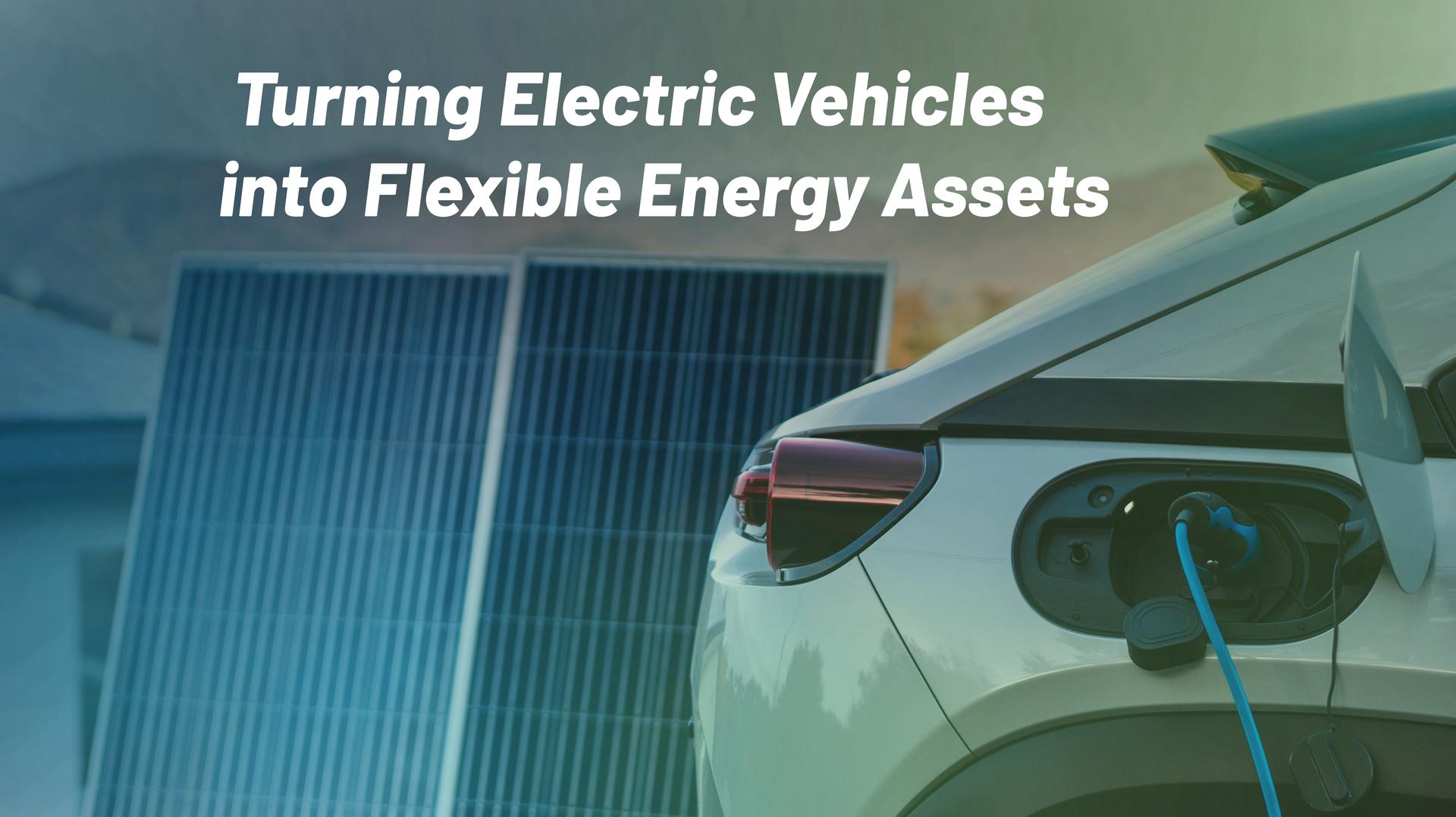
Turning Electric Vehicles into Flexible Energy Assets
Electric vehicles are changing more than transportation. As adoption grows, they are also becoming an increasingly important part of the wider energy system.
Every electric vehicle contains a battery capable of storing a significant amount of energy. Under conventional charging, electricity moves in one direction, from the grid through a charger and into the vehicle. Vehicle-to-Grid technology, commonly known as V2G, introduces the possibility of energy moving in both directions.
With V2G, a compatible electric vehicle can charge when electricity is available and discharge a controlled amount of stored energy back into the grid when required. This allows the vehicle to operate not only as a means of transportation, but also as a flexible energy asset.
The International Energy Agency describes V2G as a form of bidirectional charging that enables electric vehicles to provide grid-stabilization services by sending energy from their batteries back into the power system. However, realizing this potential requires compatible vehicles and chargers, interoperable communications, suitable regulations and clear financial incentives.
V2G therefore represents far more than a new charger function. It is an important development in the growing relationship between mobility, digital technology and energy infrastructure.
What Is Vehicle-to-Grid Technology?
Vehicle-to-Grid is a system that enables electricity to flow between an electric vehicle battery and the power grid in both directions. During normal charging, the vehicle receives electricity from the grid. In a V2G arrangement, the vehicle can also export some of its stored energy back to the grid when connected to compatible bidirectional charging infrastructure.
This exchange is managed digitally. It is not intended to leave drivers without the energy they need for transportation. The system can take account of factors such as:
- The vehicle’s current state of charge
- The minimum battery level set by the user or fleet operator
- The expected departure time
- The amount of energy required for the next journey
- Electricity demand and grid conditions
- Charging and discharging limits
- Applicable tariffs or market signals
The purpose is to use the battery’s available flexibility while continuing to prioritize the vehicle’s primary function: mobility.
This makes an electric vehicle different from a traditional electricity load. A conventional electrical appliance consumes power when it is switched on. A connected EV can potentially adjust when it charges, how quickly it charges and, with V2G, whether some energy is temporarily returned to the grid.
The US Department of Energy describes this wider concept as Vehicle-Grid Integration, or VGI. It includes the infrastructure, hardware, software, market structures and regulations required to integrate EV charging in a way that serves both drivers and the electricity system.
How Does V2G Work?
A functioning V2G ecosystem requires several connected components.
A V2G-Compatible Electric Vehicle
The vehicle must be designed to support bidirectional power flow. Its battery management system must control charging and discharging while maintaining operating limits related to battery temperature, state of charge and safety.
Not every electric vehicle currently supports this functionality. Compatibility depends on the vehicle model, its power electronics, its battery management system and the charging standards it supports.
A Bidirectional Charger
A conventional EV charger generally sends power into the vehicle. A bidirectional charger must also be capable of safely transferring energy from the vehicle back to an external energy system.
Depending on the configuration, power conversion may take place within the vehicle or inside the external charger. In both cases, the equipment must comply with the technical and safety requirements governing electricity exported to the grid.
A Charging Management Platform
V2G requires more than a physical connection. It also requires software that coordinates the vehicle, charger, user requirements and grid signals.
A charging management backend, sometimes described as a Charging Station Management System or Charge Point Management System, may receive information including:
- Vehicle availability
- Battery state of charge
- Departure schedules
- Energy requirements
- Grid capacity constraints
- Time-of-use tariffs
- Requests to increase or reduce demand
- Permissions to export energy
The platform can then determine when the vehicle should charge, pause, reduce its charging rate or discharge a controlled amount of electricity.
The IEA identifies this backend as an important interface between the charger and the grid. It processes information from both sides and sends charging or discharging instructions back to the equipment.
Grid and Market Coordination
For energy to be exported into the grid, the local utility or network operator must permit reverse power flow. Suitable metering, interconnection arrangements, tariffs and market mechanisms may also be required.
In some models, an aggregator coordinates multiple connected vehicles. Rather than treating each vehicle separately, the aggregator combines their available capacity and manages them as a portfolio.
A single EV may offer limited flexibility. A coordinated fleet of hundreds or thousands of vehicles could represent a much more substantial distributed energy resource.
V2G, V1G, V2H, V2B and V2L: What Is the Difference?
Several related terms are used when discussing intelligent and bidirectional EV charging.
V1G: Smart or Managed Charging
V1G remains unidirectional. Electricity only flows from the grid into the vehicle, but the timing or rate of charging can be adjusted. For example, charging may be shifted away from periods of high demand or scheduled when renewable energy is more readily available. The US Department of Energy notes that managed charging can reduce unnecessary strain on electrical infrastructure while ensuring vehicles are ready when required.
V2H: Vehicle-to-Home
Vehicle-to-Home allows an EV battery to supply electricity to a home. It may be used as backup power during an outage or to reduce the amount of electricity purchased during higher-cost periods.
V2B: Vehicle-to-Building Vehicle-to-Building follows the same principle at a larger site, such as a commercial building, fleet depot or public facility. Connected vehicles may supply energy to specific building loads or support on-site energy management.
V2L: Vehicle-to-Load Vehicle-to-Load allows an EV battery to directly power external equipment, tools or appliances, usually through a power outlet. It does not necessarily involve a grid connection.
V2G: Vehicle-to-Grid
V2G sends electricity from the EV battery into the wider power grid. This requires greater coordination with utilities, grid operators and market systems than the other applications.
V2G, V2H, V2B and V2L are collectively referred to as Vehicle-to-Everything, or V2X.
Why V2G Matters to the Energy System
The growth of electric mobility introduces new electricity demand. When many EVs charge at the same time, particularly during existing peak periods, they may increase pressure on local electrical infrastructure.
However, EV charging is also flexible. Many vehicles remain parked for long periods and do not need to begin charging immediately after they are connected.
Smart charging can shift demand to more suitable times. V2G goes further by allowing connected vehicles to provide energy back to the system.
Managing Peak Electricity Demand
During periods of high electricity use, V2G-enabled vehicles may discharge a controlled amount of stored energy. This could help reduce the peak demand that must be met by the wider system.
Later, when demand is lower or more electricity is available, the vehicles can recharge.
The potential benefit will differ between networks. Local grid capacity, charging behavior, vehicle availability and the number of participating EVs all affect how much flexibility can be provided.
Supporting Renewable Energy Integration
Solar and wind generation vary according to weather conditions and time of day. EV batteries could charge when renewable generation is abundant and return some energy when demand is higher or renewable output is lower.
This does not mean EV batteries replace purpose-built grid storage. Instead, they could complement other forms of flexibility by making better use of energy storage that has already been purchased for transportation.
Improving Grid Flexibility
Modern electricity systems must continuously balance supply and demand. Aggregated EV batteries may be able to respond to certain grid signals by adjusting charging or discharging. The precise services available depend on local electricity markets and regulations, but the broader value lies in giving grid operators access to an additional source of distributed flexibility.
Supporting Infrastructure Planning
Managed charging and V2G may help make more efficient use of existing network capacity. Research reviewed by the IEA indicates that grid-friendly charging can reduce some transformer overloads and lower certain network reinforcement requirements, although the scale of the benefit depends heavily on local grid conditions.
V2G should therefore not be presented as a universal substitute for grid investment. Network upgrades will still be required as electricity demand increases. Its role is to improve coordination and potentially reduce avoidable pressure on infrastructure.
Creating Potential Value for EV Owners and Fleets
Where suitable market programmes exist, vehicle owners or fleet operators may be compensated for making battery capacity available.
The value could take the form of direct grid-service payments, lower charging costs or improved management of site electricity demand. However, the commercial model must account for equipment costs, program rules, battery use and the operational needs of the vehicle. Financial opportunities are not yet universally available. The Department of Energy notes that utility programmes designed to reward vehicle-based grid services are still not widely established.
Why Fleets May Be an Important Early V2G Use Case
Fleet environments may offer some of the clearest initial opportunities for V2G.
Many fleet vehicles follow planned routes, return to central depots and remain parked for predictable periods. Operators may therefore have a clearer understanding of:
- When vehicles will be connected
- How much energy each route requires
- When vehicles must be ready
- How much battery capacity could be made available
- How charging should be coordinated across the depot
Electric school buses are frequently discussed as a potential application because they combine large batteries with long dwell periods. The US Alternative Fuels Data Center notes that these characteristics may make them suitable for V2G or Vehicle-to-Building programmes, while also emphasizing that the technology remains at an early stage and many current programmes are pilots.
Other return-to-base fleets may eventually offer similar opportunities, provided their operational schedules, vehicles, charging equipment and local regulations are suitable.
For any fleet, transportation requirements must come first. A V2G programme that reduces vehicle availability or creates uncertainty around route readiness would fail to support the fleet’s core purpose.
What Is Preventing Wider V2G Adoption?
V2G is technically achievable, but moving from pilot projects to widespread commercial deployment requires several challenges to be addressed.
Limited Vehicle and Charger Compatibility
Both the vehicle and charger must support bidirectional operation. The IEA reported in 2026 that the first commercial V2G offers for private EV owners appeared in 2025, but relatively few compatible vehicle models were available.
Interoperability Vehicles, chargers, software platforms, aggregators and utilities must exchange information reliably. Common communications and testing requirements are essential if equipment from different providers is expected to work together.
Grid Interconnection
Utilities must confirm whether electricity can be exported from vehicles into their networks. Safety requirements, metering arrangements and interconnection processes vary between jurisdictions.
Regulation and Market Design
A technically capable EV cannot deliver meaningful grid services without rules that define how it can participate and how the provider of flexibility will be compensated.
The IEA describes the current V2G regulatory landscape as fragmented, with standards and commercial arrangements still developing.
Battery Management
Additional charging and discharging introduce battery cycles. Appropriate controls are therefore required to protect state-of-charge and temperature limits and minimize unnecessary degradation.
The impact cannot be reduced to a simple statement that V2G either damages or does not damage batteries. It depends on battery chemistry, operating conditions, charging strategy and how frequently the battery is cycled.
Cybersecurity and Data Governance
V2G connects vehicles, chargers, cloud platforms and electricity systems. Each connection creates information and control interfaces that must be secured.
Vehicle availability, charging behavior and customer preferences must also be managed responsibly. The Department of Energy identifies cybersecurity, data access and privacy as important areas for wider vehicle-grid integration.
From Smart Charging to Vehicle-Grid Integration
V2G will not emerge in isolation. It is part of a broader transition toward smarter and more coordinated EV charging.
Organizations can begin preparing by:
- Understanding fleet schedules and charging requirements
- Engaging utilities early in infrastructure planning
- Introducing centralized charge point management
- Using smart charging to coordinate demand
- Improving visibility into charging energy consumption
- Selecting vehicles and equipment with long-term interoperability in mind
- Defining minimum battery and departure requirements
- Establishing appropriate cybersecurity and data-governance controls
- Testing clearly defined use cases before expanding deployment
For many organizations, V1G smart charging will be the practical first step. It can deliver useful flexibility without requiring energy to be exported from the battery. V2G can then be considered where compatible technology, commercial value and regulatory support are present.
V2G and Esyasoft’s Connected e-Mobility Approach
Esyasoft’s current e-Mobility portfolio brings together EV charging infrastructure, Charge Point Management Systems, fleet electrification, smart charging, energy management, operational analytics and driver-focused platforms.
Esyasoft’s Charging & Energy Management capabilities support load management, tariff optimization, energy visibility and grid-synchronized charging. Its Charge Point Management System provides centralized oversight of charger status, users, pricing, payments, energy usage and operational performance.
These capabilities address the growing need to manage electric mobility as a connected energy and operational ecosystem rather than as a collection of standalone chargers.
V2G represents a further stage in the evolution of that relationship. As bidirectional technology, regulations and commercial models mature, coordination between vehicles, charging platforms, fleet operations and utilities will become increasingly important.
The future of e-Mobility will not be defined only by how quickly vehicles can charge. It will also be shaped by how intelligently charging demand is managed and how effectively mobility assets interact with the wider energy system.
Conclusion
Vehicle-to-Grid technology changes the role an electric vehicle can play.
Instead of operating solely as an electricity consumer, a compatible EV can become a flexible energy asset that charges, stores electricity and, under controlled conditions, returns energy to the grid.
The potential benefits include improved grid flexibility, better coordination of charging demand, greater use of renewable generation and new sources of value for drivers and fleet operators. Yet these outcomes are not automatic.
V2G depends on compatible vehicles and bidirectional chargers, intelligent management software, utility coordination, interoperable communications, secure data exchange and supportive market frameworks.
Its most realistic path forward is therefore not a sudden transition in which every EV becomes part of the grid. It is a gradual progression from unmanaged charging to smart charging, coordinated fleets and carefully designed bidirectional programs.
As transportation and electricity systems become more closely connected, V2G provides a compelling view of what electric mobility could become: not simply a cleaner way to travel, but an active part of a more flexible and intelligent energy ecosystem.
Frequently Asked Questions
What does V2G stand for?
V2G stands for Vehicle-to-Grid. It refers to bidirectional technology that allows a compatible electric vehicle to receive electricity from the grid and return a controlled amount of stored energy to it.
Is V2G the same as smart charging?
No. Smart charging, or V1G, adjusts when or how quickly an EV charges, but electricity still flows only into the vehicle. V2G enables energy to flow in both directions.
Can every electric vehicle use V2G?
No. The vehicle must support bidirectional charging and must be connected to compatible charging equipment and software. Grid interconnection and utility approval may also be required.
Will V2G leave an EV without enough charge?
A properly managed V2G system should respect minimum battery levels, departure times and journey requirements. Mobility needs remain the priority.
Is V2G widely available today?
V2G remains an emerging market. Commercial programmes and compatible vehicles are beginning to appear, but availability, regulations and financial incentives vary significantly between countries and utility territories.