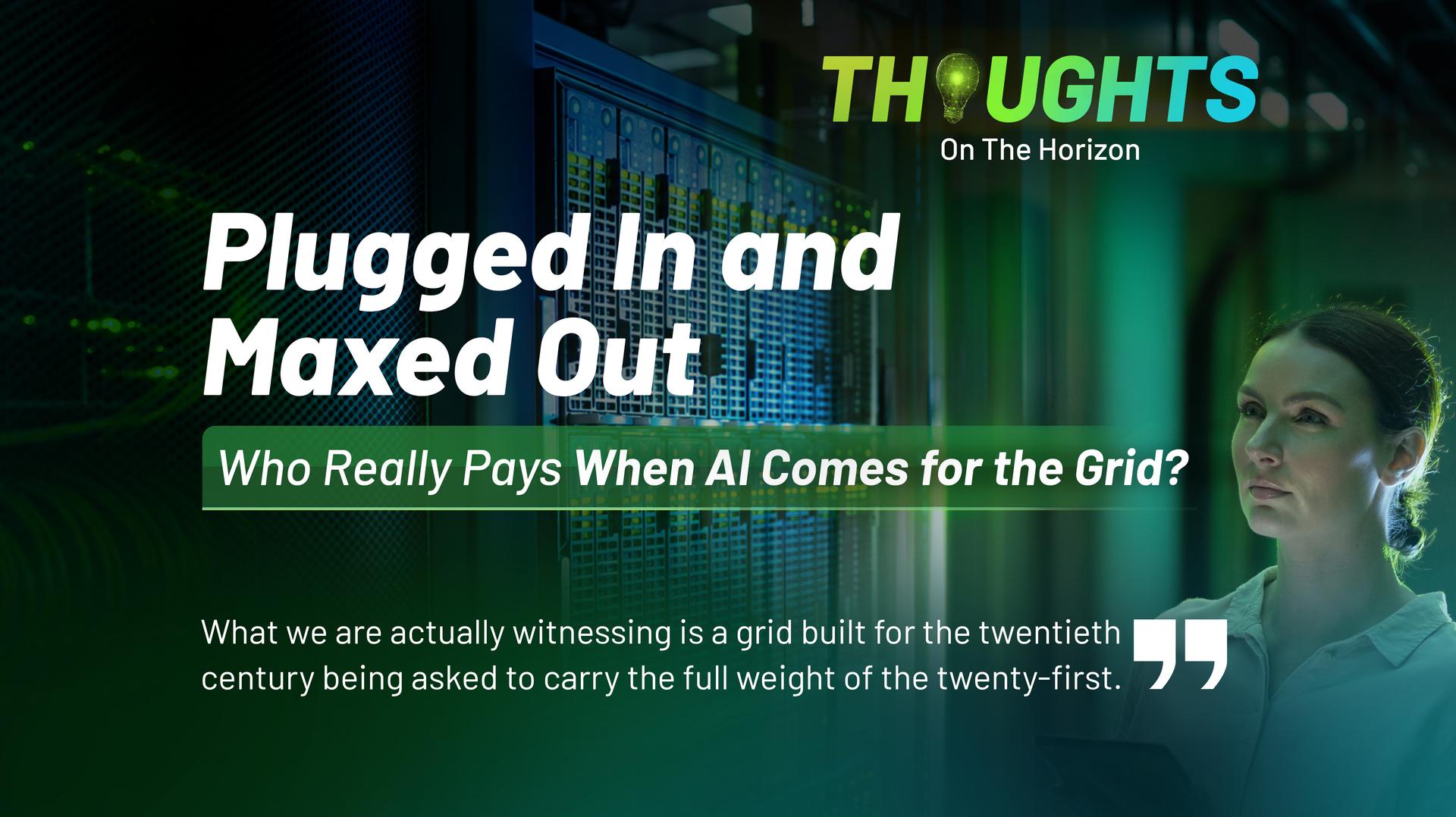
The rapid growth of AI is creating a new kind of challenge for power utilities.
Large data centers can require hundreds of megawatts of electricity, forcing utilities to plan new generation, transmission, substations, and grid capacity at a pace the traditional power system was never designed to handle. But the biggest challenge is not only how much power these facilities need. It is how much of that projected demand will actually materialize, and who carries the financial risk when it does not.
Utilities are increasingly caught between two difficult choices: build infrastructure early and risk creating stranded assets, or move cautiously and potentially delay major technology and industrial investment.
This is also raising an important question for consumers. While large new electricity users can help spread fixed grid costs across a wider customer base, the economics change when serving them requires significant new infrastructure. If demand falls short or projects close earlier than expected, those costs can ultimately become a wider burden.
New regulatory approaches are beginning to address this risk through minimum billing commitments, long-term service agreements, financial collateral, and stronger requirements for large-load customers to pay for the capacity they request.
But the issue goes beyond AI and data centers. Electrification, manufacturing growth, and other large new loads are all placing increasing pressure on infrastructure built for a much slower and more predictable era of demand growth.
The bigger question is no longer simply whether the grid can support the next wave of growth.
It is how that growth should be planned, financed, and shared fairly.
Read the full article on Linkedin.