Power systems are changing rapidly. Electricity demand is increasing, renewable generation is expanding and utilities are managing a more diverse mix of generation and consumption across their networks.
This transition is creating a growing need for flexibility.
Unlike conventional generation, solar and wind output varies with weather conditions and time of day. At the same time, new sources of electricity demand, including electric vehicles, data centers and electrified heating, are changing when and where power is consumed.
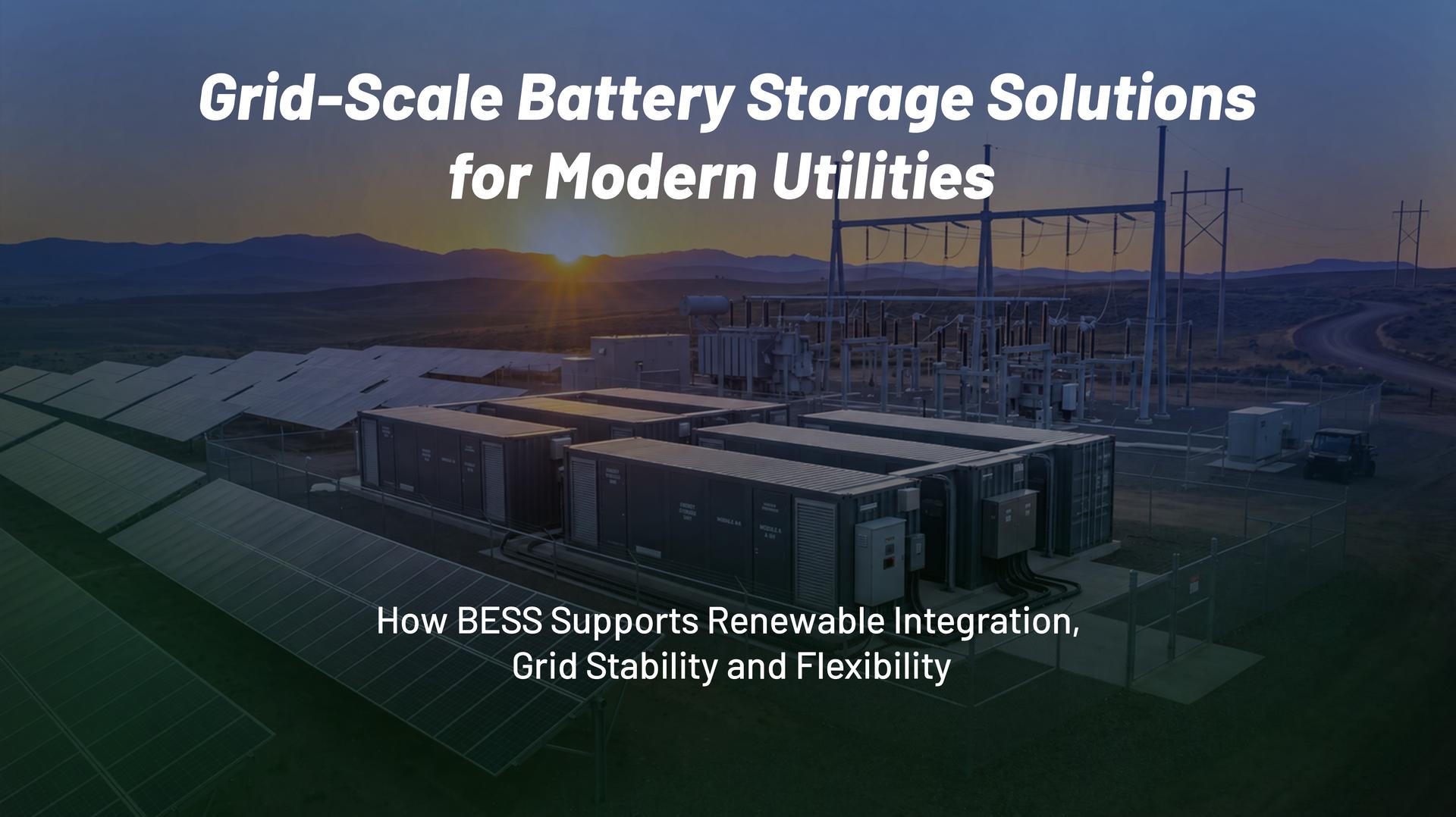
Grid-scale Battery Energy Storage Systems (BESS) provide utilities with a way to store electricity when it is available and release it when it is needed. By responding quickly to changing grid conditions, battery storage can help utilities balance supply and demand, integrate renewable generation and strengthen the resilience of modern power systems.
The International Energy Agency (IEA) describes utility-scale batteries as one of the most versatile technologies available for short-term power system flexibility. Global utility-scale battery additions reached 63 GW in 2024, bringing installed capacity to approximately 124 GW, reflecting the expanding role of storage in electricity systems.
What Is Grid-Scale Battery Storage?
Grid-scale battery storage refers to large Battery Energy Storage Systems connected to electricity networks to store and discharge energy according to grid requirements.
A BESS typically charges when electricity is available or when system demand is lower. The stored electricity can then be discharged when demand rises, renewable generation falls or the network requires additional support.
The scale and operating strategy of a battery system depend on its intended application. Some projects are primarily designed to shift renewable electricity between different periods of the day, while others provide rapid-response services that help maintain grid stability.
What makes battery storage particularly valuable is its ability to perform multiple functions within the same asset.
Supporting Renewable Energy Integration
Renewable energy is increasingly important to electricity systems, but solar and wind generation do not always coincide with periods of highest demand.
Solar generation, for example, may peak during the middle of the day while electricity demand remains high into the evening.
Grid-scale battery storage can capture electricity during periods of strong renewable generation and discharge it later when that electricity is needed. This helps make renewable energy available across a wider period rather than limiting its use to the time at which it is generated.
According to the IEA, battery storage can support the integration of wind and solar by shifting renewable generation to periods of higher demand and providing balancing services when generation and consumption do not align.
Battery storage does not remove the need for grid expansion or other forms of flexibility. Instead, it provides utilities with an additional tool for managing increasingly dynamic electricity systems.
Grid Stabilization and Frequency Regulation
Electricity systems must maintain a continuous balance between generation and demand.
When this balance changes unexpectedly, system frequency can move away from its required operating range. Because battery systems can respond rapidly to changes in network conditions, they can provide frequency regulation and other grid-support services.
By charging or discharging in response to system requirements, BESS can help grid operators maintain stability and respond to short-term changes in electricity supply and demand.
Grid stabilization and frequency regulation are among the core applications identified within Esyasoft's grid-scale BESS offering.
Peak Shaving and Load Shifting
Electricity demand varies throughout the day. During peak periods, networks may experience significantly higher demand than during off-peak hours.
Battery storage can charge when demand is lower and discharge during periods of higher consumption. This approach, commonly referred to as load shifting, reduces the amount of electricity that must be supplied from other sources during peak periods.
Peak shaving uses a similar principle to reduce short periods of particularly high demand.
For utilities, these capabilities can support more effective management of network demand. The IEA also notes that utility-scale batteries can contribute to meeting peak electricity demand and, in certain situations, help defer or reduce the need for some network upgrades.
Energy Arbitrage
Electricity prices can vary significantly depending on supply, demand and market conditions.
Battery storage can create an opportunity to charge during periods when electricity prices are lower and discharge when market prices are higher. This is known as energy arbitrage.
For grid-scale storage projects participating in electricity markets, energy arbitrage may form one part of a broader revenue strategy alongside services such as frequency regulation and grid balancing.
Esyasoft identifies energy arbitrage as one of the value streams supported through its utility-scale BESS solutions.
The commercial opportunity will depend on the electricity market, regulatory framework, operating strategy and technical characteristics of each project.
Strengthening Grid Resilience
Battery storage can also contribute to power system resilience.
When network conditions change or additional power is required, stored energy can provide an additional source of electricity. Depending on how a project is designed and connected, BESS can support backup power and help maintain continuity across critical infrastructure and energy systems.
Battery systems can also form part of microgrids and community energy projects, where local generation and storage are coordinated to improve energy availability and resilience.
However, the role a battery can perform depends on its available capacity, duration, state of charge and network configuration. Storage should therefore be designed around clearly defined grid and operational requirements.
The Growing Role of BESS in Modern Power Systems
The importance of battery storage is increasing as electricity systems become more complex.
The IEA expects the share of solar and wind in global electricity generation to rise from approximately 17% today to 27% by 2030, increasing the need for flexible resources capable of balancing variable generation and changing demand.
Grid-scale battery storage is one of those resources.
Its value comes not from performing a single function, but from its ability to support multiple grid requirements, from renewable energy integration and frequency regulation to peak management, energy arbitrage and resilience.
Grid-Scale Battery Storage at Esyasoft
Esyasoft provides utility-scale Battery Energy Storage Systems designed to help grid operators stabilize networks, store renewable energy and access multiple potential value streams, including grid balancing and energy market arbitrage.
Esyasoft's published BESS capabilities include grid stabilization and frequency regulation, renewable energy integration, energy arbitrage, peak shaving and load shifting, backup power and resilience, and applications for microgrids and community energy projects.
As part of Esyasoft's wider energy transition portfolio, BESS sits alongside Smart Utility Solutions, Software, Analytics & AI, Energy as a Service and e-Mobility, connecting energy infrastructure, digital technologies and storage across the evolving energy ecosystem.
As utilities integrate more renewable generation and manage increasingly dynamic patterns of electricity demand, grid-scale storage will play an important role in providing the flexibility required to operate reliable and resilient power systems.