Hazem Abutaha, Project Enginner, Esyasoft
Every customer I speak with today wants the same thing from their utility provider: reliability, transparency, and convenience. For many years, utilities worked hard to provide these outcomes, but they faced growing challenges. Energy demand continued to increase, customer expectations evolved, and traditional processes struggled to keep pace. Information often took time to reach the right people, resolving issues could require multiple steps, and customers had limited visibility into their own consumption. Having worked closely with end customers through Esyasoft's smart metering initiatives, I have seen firsthand why the industry needed to evolve and how this transformation is creating value for both utilities and the communities they serve.
The Challenge
The utility sector is responsible for delivering one of the most essential services in our daily lives. Yet many utilities were operating in an environment where critical information was not always available when it was needed. Customers often had questions about their consumption, billing, or service quality but had limited access to timely information. Utilities, on the other hand, had to manage large networks while relying on processes that were often reactive rather than proactive. As customer expectations increased, so did the need for greater visibility, faster response times, and more efficient operations. The challenge was not a lack of commitment from utilities. The challenge was that the traditional approach was no longer sufficient for a rapidly changing world.
The Opportunity
Smart metering has emerged as a key enabler of this transformation. What makes smart metering important is not simply the technology itself. It is the ability to create a stronger connection between utilities and their customers through better information and improved visibility. For customers, smart metering provides greater transparency. It helps them better understand their consumption and gives them confidence that the information they receive reflects their actual consumption and is timely. For utilities, it creates opportunities to improve operational efficiency, respond to issues more quickly, and make better-informed decisions. Instead of waiting for problems to be reported, utilities can become more proactive in delivering high-quality services. The result is a better experience for everyone involved.
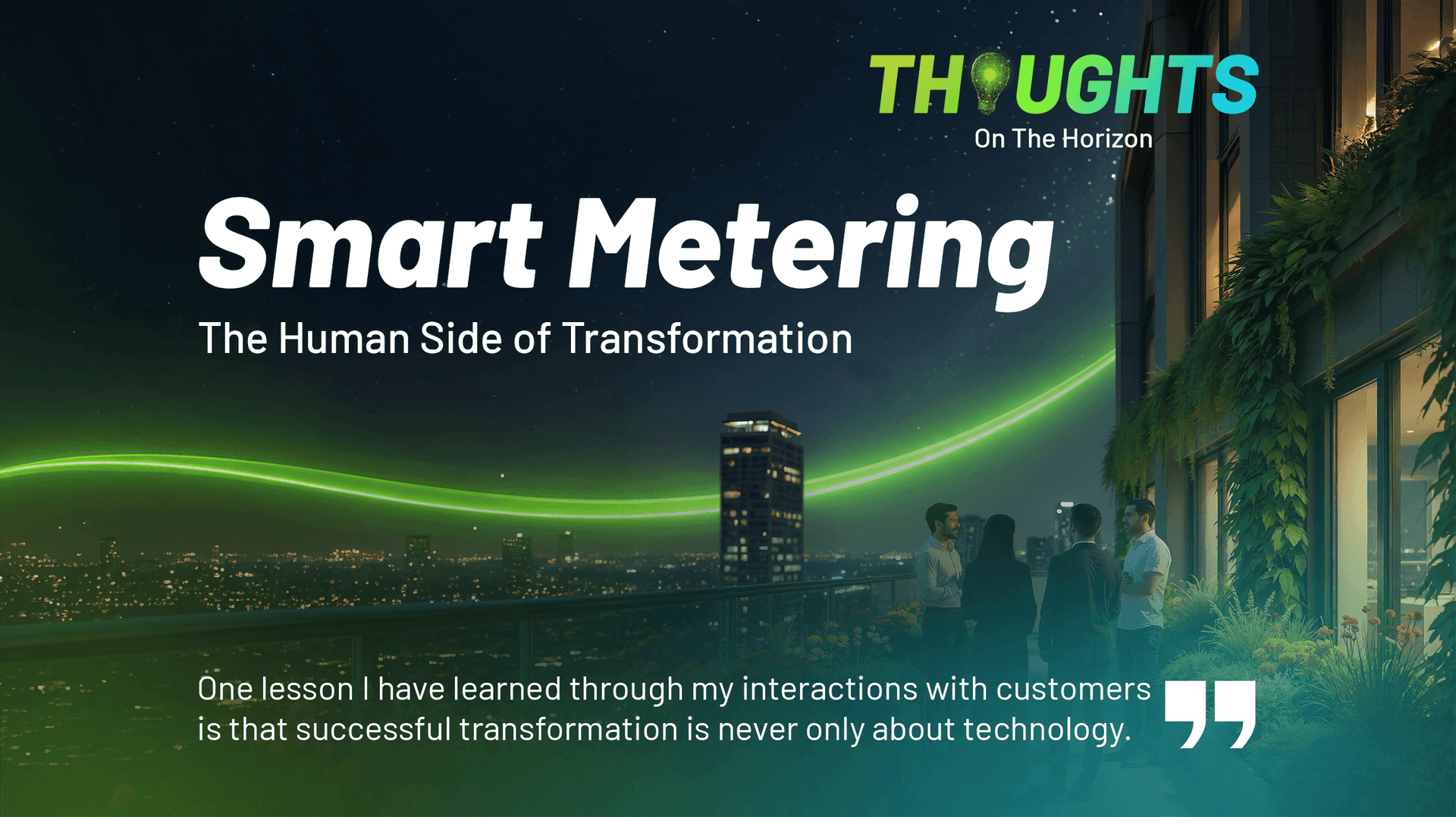
The Human Side of Transformation
One lesson I have learned through my interactions with customers is that successful transformation is never only about technology. People naturally have questions when new solutions are introduced. They want to understand how the change will affect them and whether it will improve their experience. Over time, I have seen customers move from curiosity and uncertainty to confidence and acceptance. Once they begin experiencing the benefits, the conversation shifts from understanding the change to appreciating the value it brings. These moments remind me that transformation succeeds when it focuses on people first and technology second.
Looking Ahead
The future of utilities will be shaped by greater connectivity, smarter decision-making, and stronger customer engagement. Smart metering is not simply replacing one device with another. It is helping utilities address long-standing challenges while building a more transparent, efficient, and customer-focused future.
From my perspective in the field, the most important outcome is not the technology itself. It is the positive impact it creates for customers and utilities alike. That is the transformation I have had the privilege to witness firsthand.